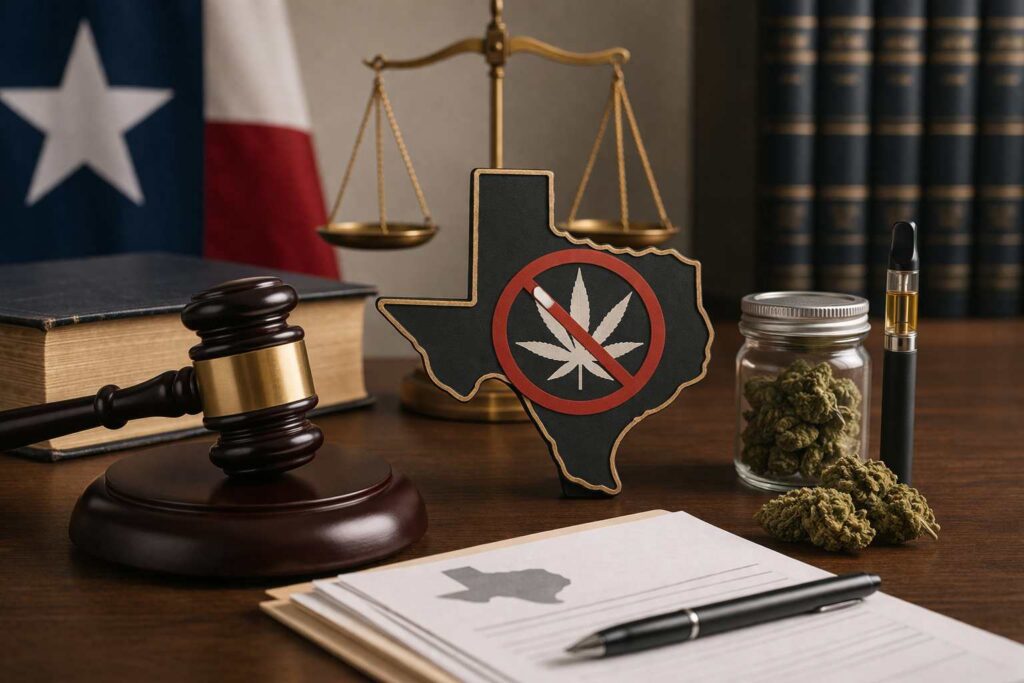
Texas’s crackdown on THC and cannabis products is no longer pending — it’s here. On March 31, 2026, new rules adopted by the Texas Department of State Health Services took effect, prohibiting the sale of smokable THC products statewide, including many hemp-derived products that had been widely available in shops across Texas for years.
If you possess, purchase, or have recently been charged in connection with a THC product, the legal landscape has shifted in ways that could directly affect your case. Here’s what you need to know — and why speaking with a criminal defense attorney sooner rather than later matters.
What the New Texas THC Rules Do
Under the updated regulations, Texas no longer allows the sale of any smokable THC product, including those derived from hemp. In recent years, hemp-derived vape products, pre-rolls, and similar items were widely sold in vape shops, smoke shops, and convenience stores throughout the state. Many consumers believed these products were legal because they were derived from hemp rather than marijuana.
That distinction no longer provides cover. The new rules clarify that smokable THC products cannot be sold in Texas regardless of their origin.
Other consumable THC products, such as edibles and infused beverages, remain legal as long as they comply with Texas hemp regulations.
The Political Background: How This Happened
These rules didn’t emerge overnight. Governor Greg Abbott signed an executive order in September 2024 directing the Texas Department of State Health Services to craft stricter rules, citing the need to protect minors from THC products. That order followed a failed legislative attempt: SB 3, championed by Lt. Gov. Dan Patrick, sought to ban THC products outright but was vetoed by Abbott, who said protections for children — not a blanket ban — were his stated goal.
The rules were finalized after a public comment period that closed in late January 2026. Dozens of comments were submitted, and only 21 were accepted by the state department. The result is the permanent ruleset now in effect.
Why the THCA Issue Matters
One of the most significant changes involves THCA — tetrahydrocannabinolic acid. While THCA is not intoxicating in its raw form, it converts into psychoactive THC when heated or burned. A loophole in previous Texas law allowed THCA products to slip past marijuana bans, and many retailers sold items labeled as “THCA hemp” on exactly that basis.
The new rules explicitly close this loophole by including THCA within the broader restrictions on smokable THC products. Products that were marketed and sold as legal hemp as recently as a few weeks ago may now expose both sellers and consumers to legal risk.
Dramatically Higher Fees for Retailers
The regulatory changes also hit businesses hard. Earlier drafts of the rules proposed raising retail and manufacturer registration fees by as much as 10,000 percent. Following public pushback, the final rules cap retail fees at $5,000 per year per location and manufacturing fees at $10,000 per year per facility — still a steep increase from the current rates of $150 and $250, respectively. Thousands of licensed hemp retailers across Texas are affected.
Why THC Laws Are So Confusing in Texas
One of the most persistent challenges with cannabis enforcement in Texas is the difficulty of distinguishing legal hemp from illegal marijuana. Both look and smell identical. In many situations, distinguishing one from the other requires specialized laboratory testing.
Because of this, people are regularly arrested for possessing products they genuinely believed were legal. Common situations that lead to charges include:
- Possession of a THC vape pen or cartridge
- Carrying cannabis products purchased legally in another state
- Having hemp products that law enforcement suspects contain illegal THC levels
- Possession of THC concentrates
- Products labeled as THCA hemp that now fall under new restrictions
Even small amounts of certain THC products can result in serious felony charges under Texas law.
Texas Penalties for Marijuana and THC Possession
Texas maintains some of the strictest cannabis laws in the country. Depending on the amount and type of product involved, you may face:
Marijuana Possession
- Up to 180 days in jail for small amounts
- Up to one year in jail for larger misdemeanor amounts
- Felony charges for higher quantities
THC Concentrates and Vape Pens
Concentrated THC products, including vape cartridges, are treated more harshly than flower under Texas law. Possession of a THC concentrate can result in felony charges even when the amount is very small — something that surprises many people who assume vape cartridges carry the same penalties as marijuana.
Many THC Cases Can Be Defended
Although THC charges can be serious, many cases contain legal and scientific issues that can be challenged in court. Potential defenses may involve:
- Questioning whether proper laboratory testing was performed
- Challenging an illegal search or unlawful traffic stop
- Disputing the classification of a substance as marijuana or prohibited THC
- Identifying procedural mistakes made during the investigation
- Arguing the product predates the new regulations
Every case is different, which is why it is important to have a knowledgeable defense attorney evaluate the specific facts before conclusions are drawn.
Charged With Marijuana or a THC Vape Pen in Texas?
The March 31 deadline has passed. If you are unsure whether something you currently possess is now illegal — or if you have already been arrested or investigated for a marijuana or THC offense — taking action early is critical.
At Austin Hagee Law Firm, we defend clients across Texas facing charges involving:
- Marijuana possession
- THC vape pens and cartridges
- THC concentrates
- Hemp-related investigations under the new rules
- Drug possession cases
Our firm understands the complexities of Texas cannabis law and fights aggressively to protect our clients’ rights.
Contact Austin Hagee Law Firm today to discuss your case and learn how we can help protect your future.

Austin M. Hagee is a trusted and proven San Antonio trial lawyer who tirelessly defends his clients’ constitutional rights. As a former prosecutor turned nationally recognized criminal defense attorney, Austin has the knowledge and expertise to get the best possible outcome for his clients.


 Loading...