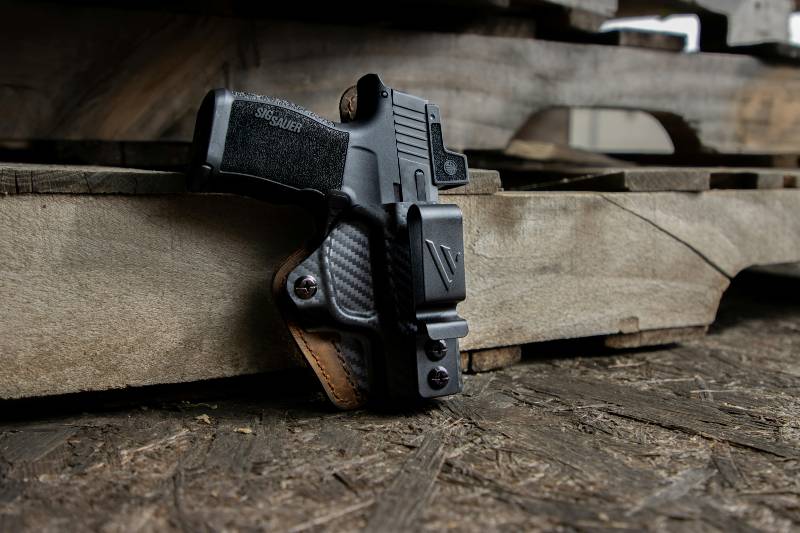
As of 2021, Texas open carry law allows most adults to carry a handgun in most public places without a license to carry. Other criteria to carry your gun openly include being the age of 21 or over, having no prior felony convictions, and openly carrying on a belt or shoulder holster.
Texas, a state with a deep-rooted gun culture, has seen significant changes to its open carry laws in recent years. These updates can be confusing for residents and visitors alike. You might have questions, such as:
- What does open carry mean in Texas?
- Can you open carry in Texas?
- Where can you open carry in Texas?
- Can you open carry a rifle in Texas?
- What happens if you carry illegally?
This guide breaks down the essentials of open carry in Texas, clarifies your rights, and answers these common questions.
If you have questions about open carry laws in Texas, please contact the San Antonio criminal defense lawyers at Austin Hagee Law Firm today.
Texas allows open carry without a license for most individuals 21 or older, but strict eligibility rules still apply.
Open carry requires a visible handgun in a proper holster. Carrying improperly can still result in criminal charges.
There are many prohibited locations, including schools, courts, bars, and properties with valid 30.07 signage.
Violating open carry laws can lead to misdemeanor or felony charges depending on the situation and your record.
Understanding Texas gun laws is essential because small mistakes can have serious legal consequences.
Is Texas an Open Carry State?
Yes — Texas is an open carry state. Since September 1, 2021, Texas has allowed most people 21 and older to openly carry a handgun in a holster without needing a License to Carry (LTC). This change came through House Bill 1927, commonly called the Constitutional Carry law. Before that, you needed a state-issued LTC just to carry your handgun in the open.
That said, “open carry state” doesn’t mean anything goes. There are still age requirements, eligibility criteria, holster rules, and places where firearms are prohibited. Understanding these rules is the key to staying on the right side of the law.
What is Open Carry?
Open carry refers to the lawful carrying of a handgun in a holster that is visible to the public eye. For example, a gun secured in a hip or shoulder holster is readily apparent to anyone nearby and is being openly carried.
Concealed carry involves keeping it out of public sight by hiding the firearm under clothing, without a visible firearm outline or bulge.
Open Carry vs. Concealed Carry in Texas
Under the Constitutional Carry law, Texas treats open carry and concealed carry the same when it comes to licensing — you don’t need a permit for either one, as long as you meet the eligibility requirements. The main practical difference is visibility: open carry means your handgun is in a holster that people can see, while concealed carry means it’s hidden under clothing.
Some Texans still choose to get an LTC even though it’s no longer required. An LTC can be useful if you travel to other states that recognize Texas permits, and it can sometimes speed up the background check process when purchasing a firearm from a licensed dealer.
What are Texas Open Carry Laws?
Texas Penal Code Section 46.02 outlines the circumstances in which carrying a handgun in public is considered legal.
As of September 1, 2021, House Bill (HB) 1927, known as the Constitutional Carry Law, allows most Texans over the age of 21 to carry a handgun without a permit, either openly or concealed. Despite its bold name, Constitutional Carry is not a right in every situation and is subject to some limitations.
Before this, a License to Carry (LTC) was mandatory if you wanted to openly carry your gun in Texas. However, HB 1927 removed this obligation, enabling eligible individuals to openly carry a handgun in a holster without a LTC.
Who Can Open Carry in Texas?
Under Texas law, you must meet specific criteria to carry your gun openly.
Age Requirement
Generally, you must be 21 or older to be eligible to carry a handgun in public openly.
There is one notable exception: active-duty military members who are at least 18 years old may be eligible to carry a handgun under certain federal and state provisions. However, for most civilians, the age threshold is firmly set at 21.
Eligibility Criteria
Beyond the age requirement, Texas law also stipulates that open carry eligibility is contingent on having no felony convictions that would disqualify them from firearm possession under federal law. Specifically, individuals must:
- Not have a prior felony conviction,
- Not have a recent conviction for certain types of disqualifying misdemeanors (e.g. family violence convictions),
- Not be subject to an unexpired protective order,
- Not be subject to mental health adjudications,
- Not be restricted from possessing a firearm under federal law, and
- Not be intoxicated, except in certain situations.
Holster Requirement
In Texas, you must carry your handgun openly in a shoulder or belt holster. This helps ensure the weapon is properly secured and not readily accessible in an unsafe manner.
It’s worth noting that the holster requirement applies specifically to handguns being openly carried. The holster does not need to have a retention strap or locking mechanism, any shoulder or belt holster satisfies the law. Carrying a handgun in your waistband without a holster, in a backpack, or tucked into a pocket does not qualify as lawful open carry.
Can You Open Carry a Rifle in Texas?
Yes. Texas law has historically been more permissive with long guns, rifles and shotguns, than with handguns. You can openly carry a rifle or shotgun in Texas without a license, and there is no holster requirement or minimum age of 21 like there is for handguns. Under federal law, you generally must be 18 or older to possess a long gun.
However, just because you can carry a rifle openly doesn’t mean it’s always a good idea. Carrying a rifle in certain public places, like a crowded shopping center or restaurant — can alarm people and potentially lead to calls to law enforcement. If an officer determines that you were displaying the rifle in a way that was intended to cause alarm, you could face charges. The same location restrictions that apply to handguns (schools, courthouses, airports, etc.) generally apply to long guns as well.
Where Can You Open Carry in Texas?
Open carry in Texas is generally permitted in most public places where concealed carry of handguns was previously allowed. However, there are specific locations where open carry remains prohibited, including:
- Secured areas within airports,
- Polling places on voting days;
- Schools (K-12 and college campuses, unless stored in a vehicle);
- Courthouses;
- Businesses that post 30.07 signs (see below);
- Some establishments that serve alcohol (51% establishments);
- Most sporting events;
- Prisons;
- Hospitals or nursing facilities;
- Mental hospitals;
- Amusement parks;
- Private property where owners prohibit firearms;
- Some federal gun-free zones, like military bases and postal facilities; and
- Governmental meeting rooms.
These requirements attempt to balance the need to ensure public safety while upholding the rights of lawful gun owners to openly carry handguns. Complying with these regulations is essential for anyone wishing to exercise their open carry privileges in Texas.
What Do 30.06 and 30.07 Signs Mean?
If you’ve spent any time in Texas, you’ve probably noticed signs with “30.06” or “30.07” posted at the entrance of businesses. These refer to sections of the Texas Penal Code and serve as legal notice that firearms are restricted on the premises:
- 30.06 sign — Prohibits concealed carry of handguns on the property.
- 30.07 sign — Prohibits open carry of handguns on the property.
- Both signs posted — Neither concealed nor open carry is allowed.
These signs must meet specific size and language requirements to be legally enforceable. If you carry past a valid 30.06 or 30.07 sign, you can be charged with a Class C misdemeanor for a first offense, or a Class A misdemeanor if you refuse to leave after being asked.
Can I Carry a Handgun in My Car in Texas?
Texas law allows you to carry a handgun in your vehicle without a license, as long as it’s not in plain view, and you are not otherwise prohibited from possessing a firearm. However, federal laws regarding firearm transportation may apply, especially if you’re crossing state lines.
This has been the law in Texas since 2007 — well before Constitutional Carry. Your vehicle is considered an extension of your property, so you can keep a handgun in your car, truck, or boat as long as it’s concealed (for example, in a glove compartment, console, or under a seat) and you’re not involved in criminal activity.
Don’t Risk Your Future Over Gun Law Confusion—Our Attorneys Are Ready to Help
What About Federal Laws?
Federal law does not prohibit the public from openly carrying firearms. However, specific rules may apply to federally owned or operated property. Additionally, federal laws interact with state regulations, particularly concerning limiting certain individuals, like convicted felons, from owning firearms.
It’s important to note that federal background checks are mandatory before acquiring a firearm from a licensed dealer anywhere in the United States, including Texas.
Don’t Ignore Local Regulations
While Texas has established a framework for open carry, some cities, and municipalities can enact stricter regulations within their jurisdictions. This means the legal landscape of open carry might differ slightly depending on your location within the state.
It’s always best to double-check local regulations before openly carrying a firearm in any Texas city or municipality. Also, be aware of signage that may be posted on business establishments that you enter.
Penalties for Illegally Carrying a Firearm in Texas
Even though Texas has relaxed its carry laws, there are still serious consequences for carrying a firearm illegally. Under Texas Penal Code Section 46.02, unlawful carrying of a weapon can result in the following penalties:
- Class A misdemeanor — Up to 1 year in jail and a $4,000 fine for carrying without meeting eligibility requirements (e.g., under 21, prior felony).
- Third-degree felony — If you carry a handgun while having a prior felony conviction, you could face 2-10 years in prison.
- Class C misdemeanor — For entering a property with a valid 30.06 or 30.07 sign while carrying.
- Class A misdemeanor — For carrying in a prohibited location like a school, courthouse, or bar (51% establishment).
If you’ve been charged with unlawful carrying of a weapon in Texas, the specifics of your situation matter. A criminal defense attorney can review the facts of your case and help determine the best course of action.
When to Seek Legal Advice
While this guide provides a general overview, Texas open carry laws can be complex. If you have doubts about your eligibility, questions about the rules of carrying in a specific location, or are accused of violating open carry laws, it’s crucial to consult a San Antonio criminal defense lawyer.
A weapons charge, even a misdemeanor — can show up on background checks and affect your ability to own firearms in the future. Getting experienced legal help early can make a real difference in the outcome of your case.
Texas Gun Laws for Out of-state Visitors
Out-of-state visitors can legally purchase firearms in Texas by complying with federal laws. Federal compliance includes undergoing a background check through the National Instant Criminal Background Check System (NICS).
When it comes to carrying, non-residents who are legally eligible to possess firearms can open carry in Texas under the same rules that apply to Texas residents — you must be 21 or older, meet all eligibility criteria, and carry in a proper holster. There is no residency requirement under the Constitutional Carry law.
If you’re traveling through Texas with a firearm, keep in mind that Texas’s permissive carry laws may differ significantly from the laws in your home state or the state you’re traveling to. It’s a good idea to research the gun laws in every state along your route to avoid accidentally breaking the law.
Don’t Take Chances with Texas Open Carry Laws. Contact Austin Hagee Law Firm
Texas’s open carry laws offer freedom and come with responsibilities on carriers. Austin Hagee Law Firm’s experienced criminal lawyers are well-versed in these complex laws and have a proven track record of success in open carry cases.
We are dedicated to providing our clients with comprehensive legal advice and thoughtful representation. Contact us today by calling us at 726-223-6041
for a consultation to discuss your rights, explore your options, and protect your interests. With over a decade of expertise, you can trust that your case is in good hands.
Where to find our San Antonio, TX office:
Frequently Asked Questions (FAQ)
Do I Need a License to Open Carry in Texas?
As of September 1, 2021, an LTC is not mandatory for open carry, provided you meet the qualifications. You must be 21 or older, have no felony convictions, no recent disqualifying misdemeanors, and not be subject to a protective order or mental health adjudication.
Do I Need to Take Firearm Training Before I Can Open Carry?
House Bill 1927 removed the training requirements for open carry in Texas. However, the Texas Department of Public Safety provides a free firearm safety course for interested parties.
Can Non-residents Open Carry in Texas?
Non-residents legally eligible to possess firearms can open carry in Texas, provided they meet the same age, eligibility, and holster requirements. There is no residency requirement under the Constitutional Carry law.
Can I Open Carry at 18 in Texas?
Generally, no. Texas law requires you to be at least 21 years old to open carry a handgun. However, active-duty military members ages 18-20 may qualify under certain provisions. For long guns (rifles and shotguns), there is no state-imposed minimum age for open carry, though federal law requires you to be 18 to possess a long gun.
What Is the Difference Between a 30.06 and 30.07 Sign?
A 30.06 sign prohibits concealed carry of handguns on the property, while a 30.07 sign prohibits open carry of handguns. If a business displays both signs, you cannot carry a handgun on the premises at all — openly or concealed.
What If Someone Feels Threatened by My Openly-Carried Firearm?
Texas Penal Code Section 22.07 details the crime of terroristic threats. This crime can apply to anyone who displays a firearm in a way that is intended to create fear of imminent serious bodily injury. Typically, open carry under the law will not meet the threshold for a terroristic threat charge.

Austin M. Hagee is a trusted and proven San Antonio trial lawyer who tirelessly defends his clients’ constitutional rights. As a former prosecutor turned nationally recognized criminal defense attorney, Austin has the knowledge and expertise to get the best possible outcome for his clients.