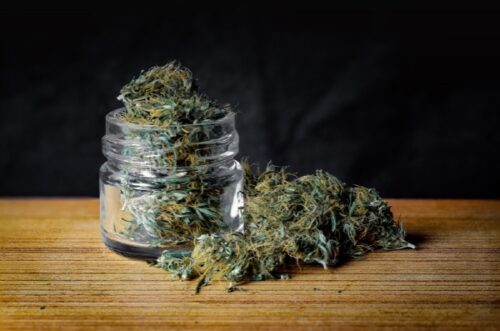
As many states legalize recreational marijuana, Texas maintains strict laws against the possession and use of weed, especially for minors. While it may be hard to tell with a CBD store on every corner that is selling hemp. In Texas, marijuana, non-hemp oil, and consumable products that have certain amounts of Delta-9 tetrahydrocannabinol are still completely illegal. Even small amounts of cannabis or cannabis concentrate can lead to serious charges, and Texas courts treat these offenses seriously. For example, a single illegal vape pen or candy can lead a minor to be charged with a felony for Possession of Controlled Substance Penalty Group 2. Also, CPS may get alerted and investigate the child’s surroundings at home depending on the circumstances of the possession charges. This can commonly happen even if the possession took place outside of the home, such as at school or while the minor was out with friends. These situations can transpire very quickly, and with literally one bad friend, one bad decision, or by mistake of what was happening, a minor can quickly be quickly looking at extremely tough repercussions for them and their future.
If your child is facing charges for being a minor in possession of marijuana in Texas, understanding the legal process, potential penalties, and possible defenses can help you make better decisions as the case progresses. Below, we outline key information to help your family navigate this situation.
What to Do If Your Child Faces Marijuana Possession Charges?
The first and most important step is to consult with a Texas criminal defense lawyer that is skilled in juvenile marijuana possession as soon as possible. An experienced attorney familiar with Texas drug laws will explain your legal options and work to protect your child’s future. Despite massive growth of the Texas population from other states, and the widespread popularity of legal CBD products in Texas, marijuana and CBD are both illegal for a minor to possess.
In September of 2025, Texas made an emergency rule adoption, which enacted a higher age of 21 for all consumable legal hemp products. This law went into effect on October 2, 2025. As of October 2, 2025, a person under the age of 21 cannot consume or possess any legal hemp products in the state of Texas.
While Texas does have the Compassionate Use Registry of Texas or CURT program for legal marijuana use of low concentration THC items, this program must be entered into properly prior to the possession charge taking place. The typical medical conditions eligible for this program are generally limited to epilepsy, seizure disorders, multiple sclerosis, spasticity, amyotrophic lateral sclerosis, autism, cancer, neurodegenerative disease, and a few other exceptions.
When speaking to an attorney, you will want to ask their familiarity with the landscape of Texas and federal marijuana laws, such as CURT and Senate Bill 2024. Also, you’ll want to find out if the attorney has experience with your exact type of case, what paths do they see for resolving the case, and do they have a plan to help protect your child’s future.
At Austin Hagee Law Firm, we have a strong track record of defending minors in drug-related cases. We have also focused on THC related offenses for years in both school disciplinary settings, juvenile court settings, and when the charges become adult charges in a criminal venue. With our expertise, and more than 20 years of combined legal experience, we have the skills and experience to safeguard your child’s rights and help mitigate the consequences of these charges.
Why Hire a Juvenile Marijuana Possession Defense Attorney?
Facing a juvenile possession of cannabis charge can be overwhelming for both minors and their families. An attorney that has years of experience with the charges of being a minor in possession of marijuana in Texas can help in the following ways:
- Evaluate the case. A thorough review of the facts and evidence can help find any legal or procedural errors of law that took place.
- Expertise in the law. Knowledge of a rapidly changing area of the law and the legal attack angles, such as a motion to compel testing, successful attack points for motions to suppress, and motions to dismiss for failure to comply with another Texas law.
- Negotiate with prosecutors. Minor possession cases, when properly handled by a competent attorney, often result in plea deals or alternative resolutions, such as deferred probation (no-conviction) or diversion programs.
- Advocate for leniency. Courts recognize that minors are more capable of rehabilitation, allowing a skilled attorney to advocate for lighter penalties such as counseling or community service alternatives.
- Protect the minor’s future. By keeping the case in juvenile court, penalties can be focused on rehabilitation rather than punishment, with the possibility of complete record expungement or sealing after reaching adulthood.
The outcome of a juvenile criminal case can significantly benefit from the expertise of an experienced defense attorney. They can identify potential defenses, challenge evidence, and advocate for the most favorable outcome through a plea deal or alternative sentencing options. They can also use previous experience to locate exploitable weaknesses in the case or highlight extremely mitigating circumstances for the young person being accused. A strong legal defense and thorough mitigation will help make the value of hiring a Juvenile Criminal Defense Attorney in Texas well worth it.
Minor in Possession of Marijuana Penalties
Texas law clearly states that minors caught with illegal marijuana, vape pens, THC gummies, or even legal CBD can face criminal charges and penalties. The severity depends on the amount of cannabis, the THC concentration of the substance found, and the minor’s prior record. Here’s a breakdown of some of the potential minor in possession of marijuana penalties in Texas:
- Possession of two ounces or less—constitutes a Class B misdemeanor with penalties including up to 180 days in jail or juvenile justice facility, a fine of up to $2,000, or both. There is also the potential for a driver’s license suspension, if convicted.
- Possession of amounts of four ounces or more—can lead to more severe charges like Class A misdemeanors or even felonies, depending on the weight of the marijuana, resulting in harsher penalties, including extended jail time or time in a juvenile justice facility, higher fines, and the potential for a felony conviction on your record. There is also the potential for a driver’s license suspension.
- Possession of concentrated THC products also known as possession of a controlled substance penalty group 2 (i.e. vape pens or edibles)—is going to be classified as a felony in Texas. Texas classifies concentrated THC products as a felony due to the high potency and high concentration amounts of THC these substances can have in them. The level of the felony will depend on the total weight of the THC substance seized by law enforcement.
A marijuana conviction can also result in a criminal record, which can have long-term effects on your child’s future.
What Other Consequences Might a Minor Face?
Beyond the immediate legal penalties, minors convicted of cannabis possession can face lasting consequences. Texas law allows courts to suspend a minor’s driver’s license for up to 180 days. For repeat offenses, the suspension may last longer.
A criminal conviction might also affect college admissions and financial aid eligibility since some schools require disclosure of juvenile criminal history prior to admission.
What Alternatives to Jail Time Are Available for Minors?
Texas offers several alternatives to jail time for minors, recognizing their potential for rehabilitation. The following alternatives are often available to first-time offenders that have competent legal representation advocating for them:
Deferred Adjudication
This allows minors to complete probation without ever receiving a formal conviction. Charges may be dismissed if the minor meets all court requirements, such as attending drug education classes, passing drug screening tests, meeting with their probation officer regularly, and performing community service hours.
Drug Education Programs
Courts may mandate attendance in drug education programs, which focus on the risks of drug use to help prevent future offenses. Completing these programs could reduce penalties or lead to case dismissal in certain situations. This sometimes becomes available when it is clear that a juvenile needs rehabilitation rather than punishment.
Pre-trial Diversion Programs
Many counties in Texas have created Pre-trial Diversion (PTD) programs for non-violent drug crimes. PTD is typically reserved for those with no criminal history or extremely limited history. These programs create a contractual agreement between the District Attorney and the Juvenile, with terms that must be completed such as completing a drug course, paying a small program fee, providing a clean drug test, and completing some community service hours. If PTD is completed properly, the juvenile will have no formal record, receive a complete dismissal, and can be entitled to an earlier record sealing or expungement than may be available through a deferred probation or even a case dismissal. Pre-trial diversion is a newer path available in Texas criminal law cases, but due to its usefulness to prosecutors and criminal defense attorneys, it has been widely adopted across the state of Texas. Ask your attorney if PTD or a diversion program is a possible outcome in your juvenile’s case.
Common Defenses for Minors Charged with Marijuana Possession
An experienced juvenile defense attorney will evaluate the case and develop a defense strategy based on the specific legal and factual circumstances. Let’s look at some of the most common defenses.
Illegal Search and Seizure
The Fourth Amendment of the U.S. Constitution protects citizens against unlawful searches and seizures. If the defense can prove that the arresting officer did not have probable cause or did not follow proper procedures in searching, the judge could exclude critical evidence.
For instance, if the substance was found as the result of an illegal search of a minor’s vehicle or home, the resultant evidence may be suppressed. If the evidence suppression weakens the case enough, the prosecution may have no choice but to dismiss the charges. Improper search and seizure is a fact-specific defense.
Lack of Possession
Texas law requires the state to establish “possession,” which can be actual possession or constructive possession. Actual possession means the minor had the marijuana on their person—meaning in their pocket or in their bag or purse. Constructive possession means that it was found in a shared space, but the minor had actual care, custody, control, or management of the cannabis. For example, it may serve as a valid defense if the weed was found in a shared space, such as a friend’s car, and the minor had no knowledge of its presence or control over it. On the other hand, if the weed was in the friend’s car, but in a backpack that was clearly your child’s bag, this may establish care, custody, and control by your child.
Issues with Evidence
In some cases, it may be possible to challenge the evidence based on flaws in the way the marijuana was handled or tested. If the chain of custody was broken, or if there were problems with the drug testing process, the defense may argue that the evidence is unreliable and should not be used against the minor. To establish that something is marijuana, and not hemp, in Texas, it must be tested and have more than a 0.3% total delta-9 THC concentration on a dry weight basis. Without this lab result, a minor can only be cited with a Class C citation for Minor in Possession.
Medical Marijuana Defense
Although Texas has very limited medical marijuana laws, in certain rare cases, a minor might have a legal prescription for low-THC concentration cannabis. If the marijuana in question falls within the narrow bounds of Texas’ medical marijuana prescription regulations, this could be used as a legal defense.
Every case is unique, and the effectiveness of any defense strategy hinges on the specific circumstances of the arrest and the evidence brought by the prosecution.
Can a Minor Be Charged As an Adult for Marijuana Possession in Texas?
Most marijuana possession cases for minors are handled in juvenile court, where judges have more discretion and tend to be lenient in their sentencing. In some cases, a minor may face adult charges for possession of marijuana, especially if the offense involves large quantities or if the minor has a prior criminal record. Upgrading juvenile charges to an adult charge is called being certified as an adult. In Texas, minors can be certified as an adult for certain serious felony crimes starting at the age of 14.
Texas law allows prosecutors to request a certification hearing, at this hearing a judge can decide whether to transfer the case to adult court. If convicted in adult court, the penalties are significantly harsher, including longer jail time, more significant fines, and a permanent criminal record.
Get Experienced Juvenile Defense with Austin Hagee Law Firm
If you’re a minor or a parent of a child facing a minor in possession of marijuana charge in Texas, don’t risk the future, hire a firm with the skill and resources to properly help guide you through this difficult case. At Austin Hagee Law Firm, we have extensive experience minimizing penalties for minors possessing marijuana and can provide the representation your family needs. We have handled hundreds of marijuana related criminal charges, including many juvenile cases, and we have helped the vast majority of our clients avoid a conviction or serious repercussions.
Our attorneys have more than 20 years of combined experience, have experience as prosecutors and public defenders, have received national awards from Forbes, SuperLawyers, Lawyers of Distinction, and National Trial Lawyers, and we have been recognized locally by SA Current magazine, SA Scene Magazine, and the San Antonio Express News. The attorneys of our firm have the skill and resources to help your family get the outcome you and your family deserve, don’t hesitate. Contact us today to discuss your options and protect your child’s future.
Get Directions to our San Antonio, TX office:
Resources:
- The Juvenile Justice System in Texas. Texas Juvenile Justice Department, link
- Texas Compassionate-Use Act, link
- Authority To Prescribe Low-Thc Cannabis To Certain Patients For Compassionate Use, link
- Punishments Texas Penal Code, link
